Grand Touring America in a 575M
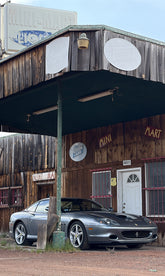
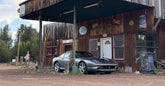
14,000 miles, 48 states, no support crew, and no spare tire
Like most bad ideas, this one began by sounding almost reasonable. What if you drove a twelve-cylinder Ferrari all the way around America? Not across America. Around it. All 48 states, mostly on secondary roads. No support crew. No chase vehicle. No spare tire. As far as our author could determine, nobody had done it before.
The route ran clockwise: New England, Appalachia, the South, Route 66, the West, up into Canada, the northern Rockies, the Plains, the Midwest, and home again. 13,882 miles over 54 days, rounded up to 14,000 after three ferry crossings, a remote border entry, tread-bare rear tires, a long parade of aging motels, and forests' worth of insects welded to the bumper.
Marshall Stocker had planned the whole thing around scenic byways and famous roads. He learned quickly that America's best driving roads are usually not famous at all. They run between the places most people miss while making good time. The interstate is how you cross America. The secondary road is how you visit it.

The roads nobody puts on a poster
Secondary roads restore texture - diners, grain elevators, old bridges, faded storefronts, civic oddities, and towns you would never see unless curiosity overruled efficiency. And somewhere out there, they changed what the car was for.
The car, for the record, is a 2003 575M Maranello, s/n 133218, Grigio Titanio over Beige, F1 transmission. One owner before him, fewer than 8,000 miles in twenty-three years: a previous custodian whose restraint our author was grateful for, while noting that the man had averaged fewer miles per year than the trip would cover on a good afternoon.

Fourteen thousand miles later
The 575M may be the last analog chapter of Ferrari's grand touring tradition. A 5.75-liter V12 under a long hood, in bodywork drawn before supercars started looking less like art and more like weaponry. No cruise control. No backup camera, no blind-spot indicators, no touchscreens, no seat heaters, and nowhere sensible to put a cup of coffee. What it has instead: comfortable seats, excellent visibility, a usable trunk, a glorious engine, and a cassette player. Anything more would have been decadence for something meant to be an adventure.
And on those roads, it was never too wide, too nervous, too stiff, or too fragile. Low, yes: curbs required diplomacy. But the long hood, the stable chassis, the settled manners: after fourteen thousand miles, it felt less like a collectible being exercised and more like a car finally given its intended assignment.
The full account is in Cavallino 274. Not a subscriber? Join Cavallino and get the next one in your mailbox.